Skip to content

Free course with certificate

ESG fundamentals: the complete foundation course

What ESG is, who asks for it, how the frameworks and laws fit together, and how to start working in it — with Indian examples.

Level
Beginner
Lessons
12, about 3 hours 10 minutes
Worked exercises
13
Exam
20 questions, 70% to pass
Facts checked
November 2026

Illustrative image

About this course

What environmental, social and governance (ESG) means and where it came from, why investors, regulators and customers ask about it, the climate basics, materiality, how the main frameworks fit together, ESG ratings and investing, credible data and greenwashing, and ESG careers — with exercises, a case study and a final exam with a certificate.

What you will be able to do

  • Explain what ESG is, where it came from and why companies report it
  • Explain the climate science and policy every ESG professional needs, including India's targets
  • Apply financial, impact and double materiality to a business
  • Explain how BRSR, the ISSB standards, the ESRS, GRI and the GHG Protocol fit together
  • Explain how ESG ratings and ESG investing work, and how India regulates rating providers
  • Recognise what makes ESG figures and claims credible, and avoid greenwashing
  • Describe ESG roles and the skills they need
  • Tell mandatory ESG obligations from voluntary frameworks, and name the Indian filings and authorities behind ESG data

Inside the course

Lessons

  1. Module 1 — What ESG is and why it matters

    About 45 minutes
  2. What ESG means

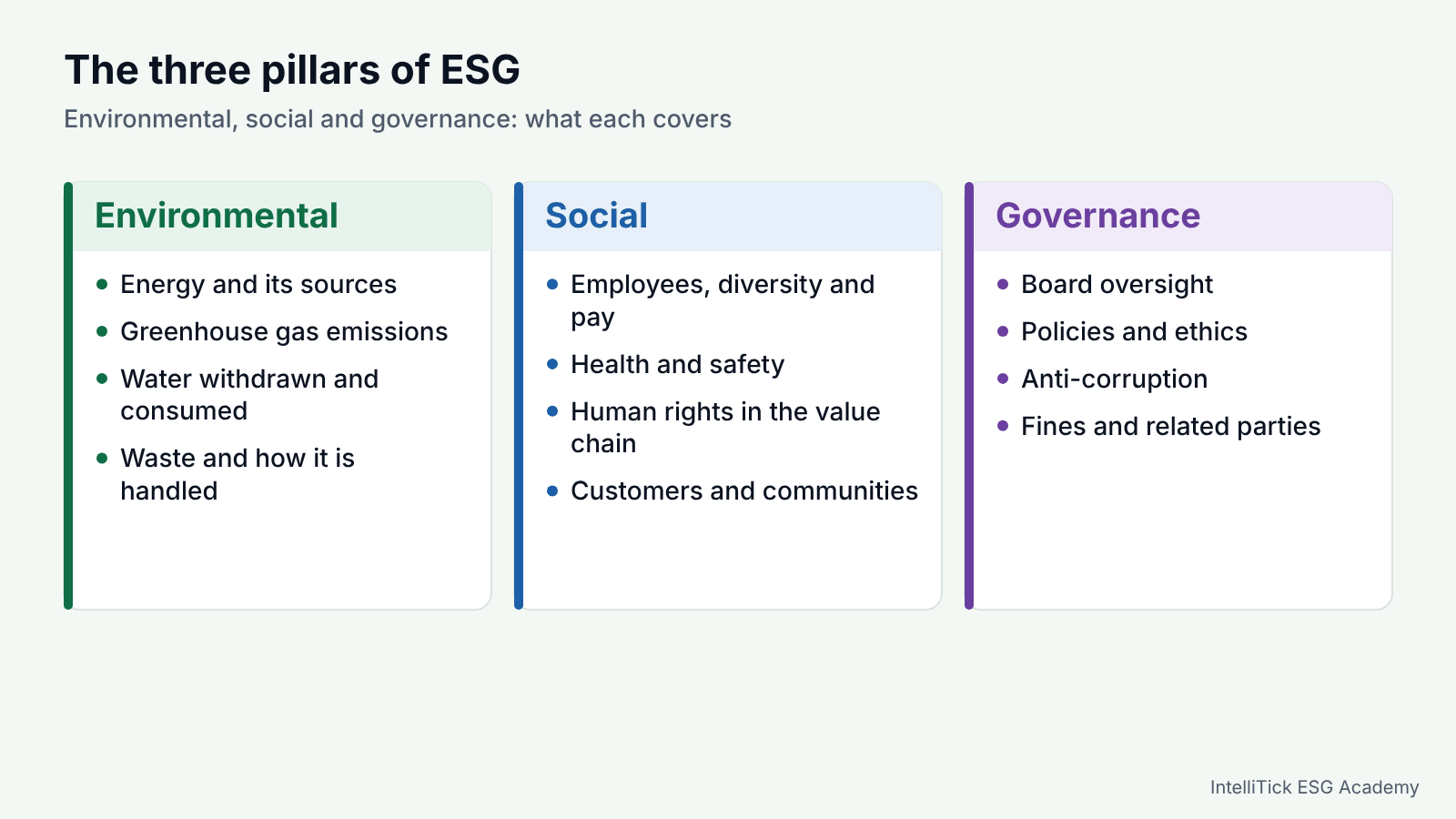
    ESG stands for environmental, social and governance: the three groups of subjects a company is asked about when people want to know how responsibly it is run, and how exposed it is to risks that a balance sheet does not…

    15 min

  3. Who asks for ESG information, and why

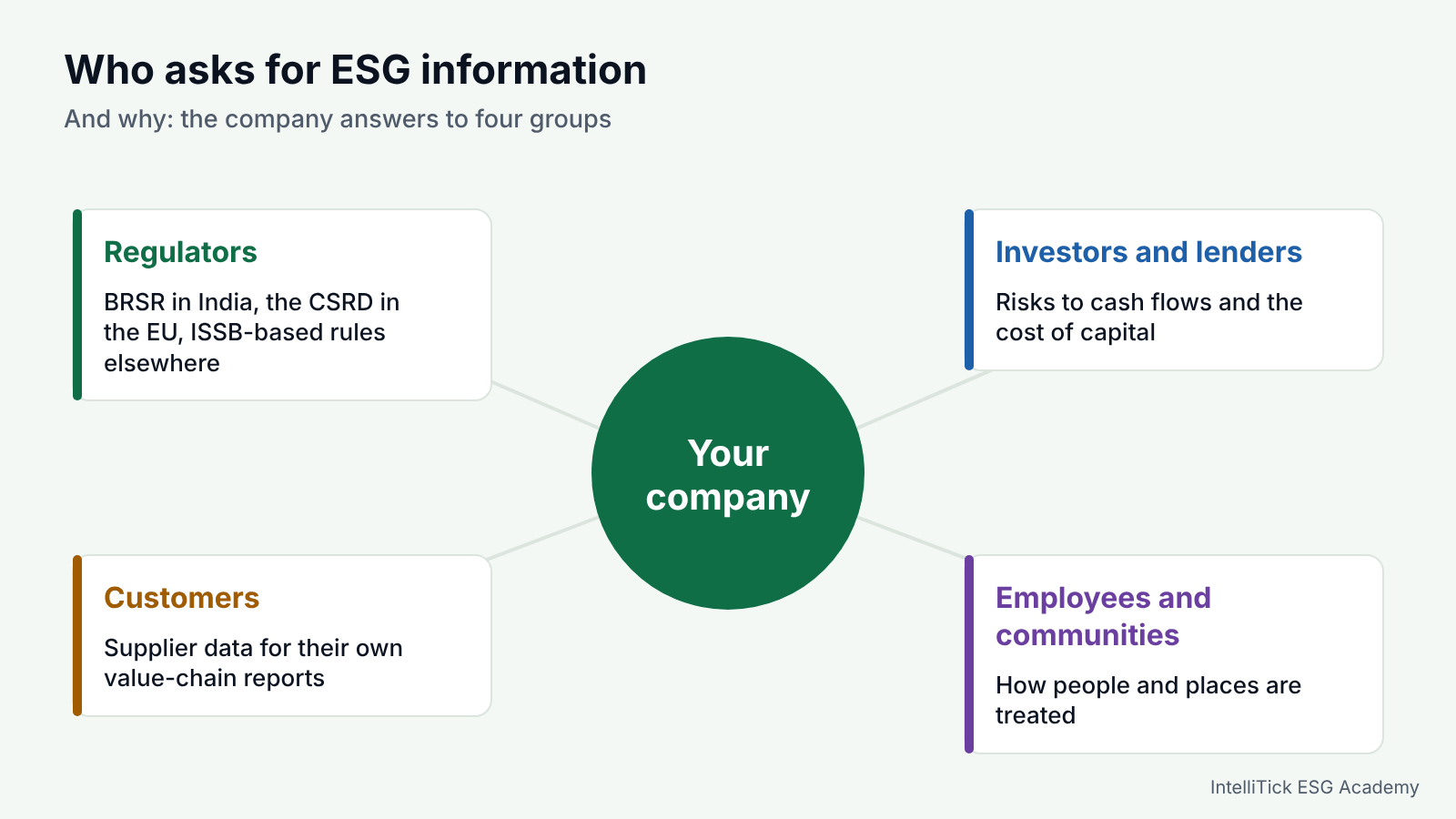
    Companies report on ESG because the people they depend on ask — and, for a growing number of companies, because the law requires it.

    15 min

  4. Climate essentials for ESG professionals

    Climate is the most reported ESG topic. Every ESG role needs a working knowledge of the science, the international goals and India's commitments.

    15 min

  5. Module 2 — Materiality and frameworks

    About 45 minutes
  6. Materiality: deciding what matters

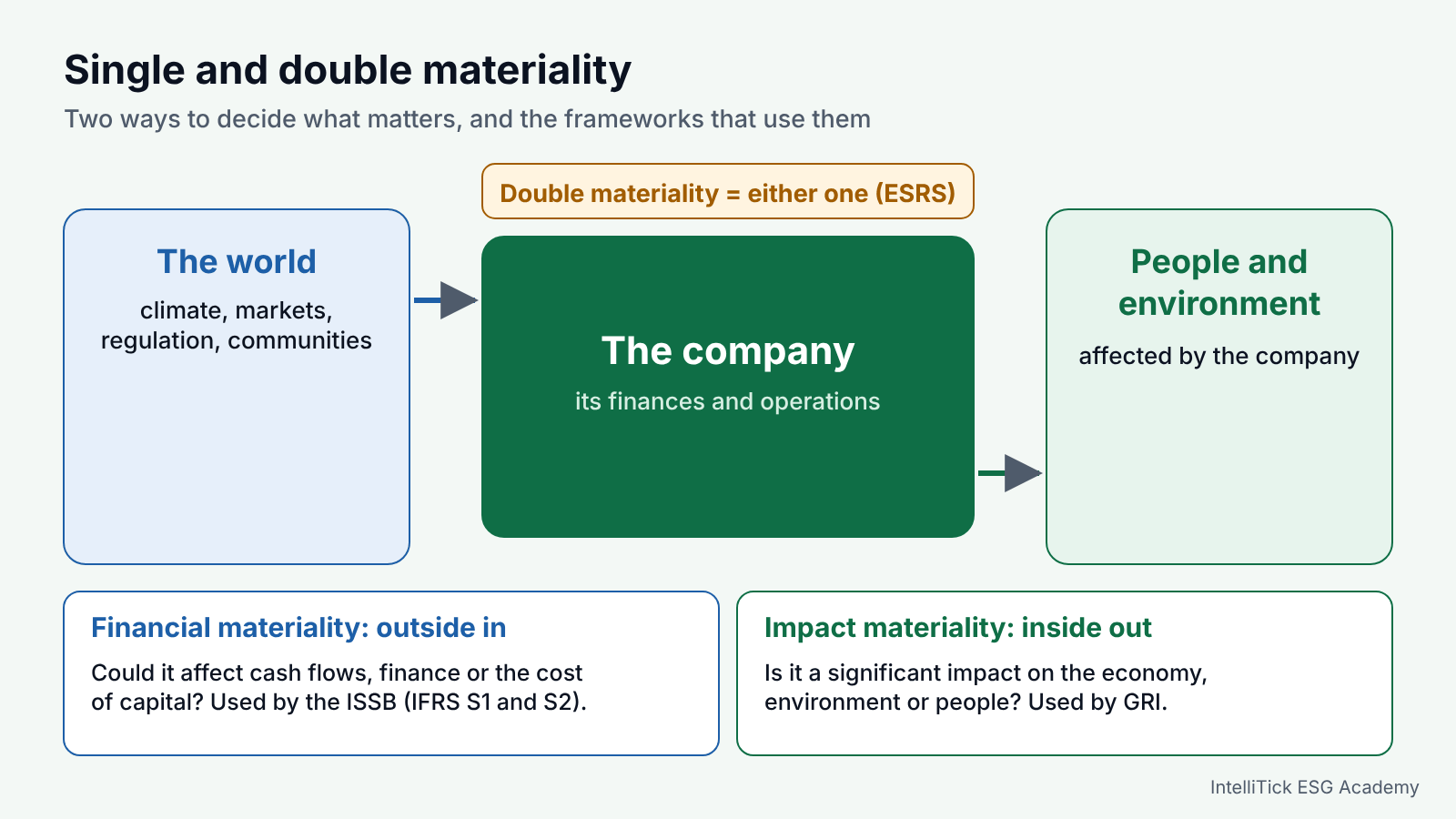
    Materiality is how a company decides which ESG subjects matter enough to report. There are two ways to look at it, and the frameworks differ on which they use.

    15 min

  7. The frameworks and how they fit together

    Several frameworks set what an ESG report contains. They overlap, but each answers a different question and serves a different reader.

    15 min

  8. ESG ratings and ESG investing

    ESG ratings turn a company's disclosures and other information into a score that investors use. They are influential — and they often disagree.

    15 min

  9. Module 3 — Credibility, careers and practice

    About 1 hour
  10. What makes ESG figures credible

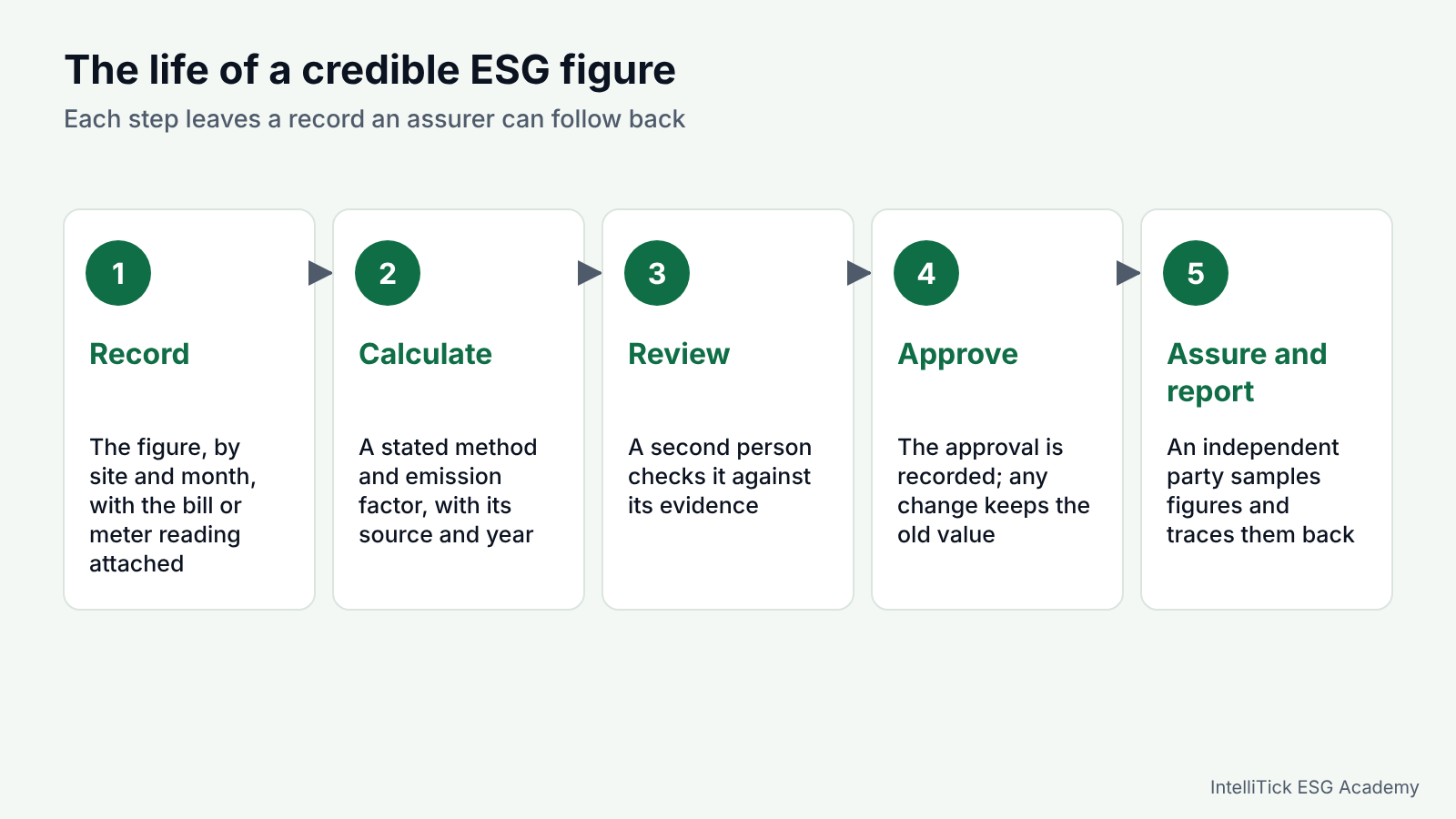
    Readers increasingly test ESG figures the way they test financial ones: by tracing a number back to its source.

    15 min

  11. Greenwashing: how to recognise and avoid it

    Greenwashing is giving a misleading impression of environmental or social performance. It damages trust, invites regulatory action and, increasingly, lawsuits.

    15 min

  12. Mandatory or voluntary: the ESG compliance map

    ESG work sits on three layers: disclosure laws that say what a company must publish, operating laws that make it record and file the underlying data with government, and voluntary frameworks and ratings that investors a…

    15 min

  13. ESG roles, skills and how to get started

    ESG work has grown from a corporate communications task into a profession spanning reporting, data, risk, assurance and investment. Most roles need the same core: frameworks, data and clear writing.

    15 min

  14. Module 4 — Capstone

    About 35 minutes
  15. Case study: Narmada Textiles answers its first ESG questionnaire

    Narmada Textiles is a fictional unlisted Indian garment exporter with 1,800 workers in two factories in Tiruppur. Its largest customer, a European retailer, sends an ESG questionnaire; its bank asks for an ESG summary f…

    35 min

  16. Reference

    About 5 minutes
  17. Glossary and where to go next

    The reference you will come back to: the core vocabulary of ESG, and where to go next in the Academy.

    5 min

  18. Final exam and certificate

    Opens when every lesson is completed. 20 questions, 40 minutes, 70% to pass.

Sign in with your e-mail to record your progress and take the exam. Reading the lessons needs no sign-in.

Sources used in this course

  1. SEBI circular: Business responsibility and sustainability reporting by listed entities (SEBI/HO/CFD/CMD-2/P/CIR/2021/562) — SEBI. 10 May 2021; checked November 2026
  2. Master Circular for compliance with the SEBI (LODR) Regulations, 2015 — Chapter IV-B and Annexures 16, 17 and 17A — SEBI (copy published by NSDL). 30 January 2026; checked November 2026
  3. IFRS S1 General Requirements for Disclosure of Sustainability-related Financial Information — IFRS Foundation. June 2023; checked November 2026
  4. Adoption of IFRS Sustainability Disclosure Standards (World Standard-setters Conference plenary) — IFRS Foundation. September 2026; checked November 2026
  5. Directive (EU) 2026/470 (the sustainability Omnibus) — EUR-Lex. 24 February 2026; checked November 2026
  6. GRI 3: Material Topics 2021 — Global Reporting Initiative. 2021; checked November 2026
  7. TCFD (the Task Force's recommendations and their transfer to the ISSB) — IFRS Foundation. checked November 2026
  8. GHG Protocol Corporate Accounting and Reporting Standard, Revised Edition — WRI and WBCSD. 2004; checked November 2026
  9. India's updated Nationally Determined Contribution approved by the Union Cabinet — Press Information Bureau, Government of India. 3 August 2022; checked November 2026
  10. SEBI amends credit rating agency norms to include provisions relating to ESG rating providers — Taxmann. July 2023; checked November 2026
  11. Greenhouse gas emission intensity targets notified for four more sectors under the Carbon Credit Trading Scheme — Press Information Bureau, Government of India. 22 January 2026; checked November 2026
  12. Industry Standards on Reporting of BRSR Core — Industry Standards Forum (ASSOCHAM, CII, FICCI), published by NSE. December 2024; checked November 2026
  13. The Environment (Protection) Rules, 1986 (rule 14: environmental statement in Form V) — Ministry of Environment, Forest and Climate Change. as amended; checked November 2026
  14. Hazardous and Other Wastes (Management and Transboundary Movement) Rules, 2016: forms and timelines — Tamil Nadu Pollution Control Board. checked November 2026
  15. Jan Vishwas (Amendment of Provisions) Bill, 2022, as passed by Lok Sabha: amendments to the Environment (Protection) Act and the Air Act — PRS Legislative Research. July 2023; checked November 2026
  16. Corporate social responsibility under the Companies Act, 2013 (presentation) — Institute of Company Secretaries of India. checked November 2026

Report it with the evidence behind every figure

ESGTrack prepares BRSR, CSRD and ISSB reports from approved data, with an audit trail an assurer can test.