
ESG fundamentals: the complete foundation course
What ESG is, who asks for it, how the frameworks and laws fit together, and how to start working in it — with Indian examples.
- Lessons
- 12
- Study time
- 3 hours 10 minutes
- Exercises
- 13

Free course with certificate
Calculate Scope 1, 2 and 3 emissions under the GHG Protocol with Indian factors, build an inventory an assurer can test, and meet PAT, CCTS and CBAM.
Illustrative image
A full practitioner course in corporate greenhouse gas accounting under the GHG Protocol: gases and GWPs, boundaries and base years, Scope 1 combustion, process and fugitive emissions, Scope 2 by location and market, the 15 categories of Scope 3 and how to calculate them, data quality and assurance, targets, India's carbon market and CBAM, the PAT and CCTS filings and their penalties — with worked Indian examples, exercises with model answers, a case study and a final exam with a certificate.
A greenhouse gas inventory is a company's account of the greenhouse gases its activities cause in a year, measured in tonnes of carbon dioxide equivalent (tCO₂e) and divided into three scopes. It is to climate what the …
An inventory counts seven gases, and converts each into carbon dioxide equivalent (CO₂e) with its global warming potential (GWP) — how much warming one tonne causes over 100 years compared with one tonne of CO₂.
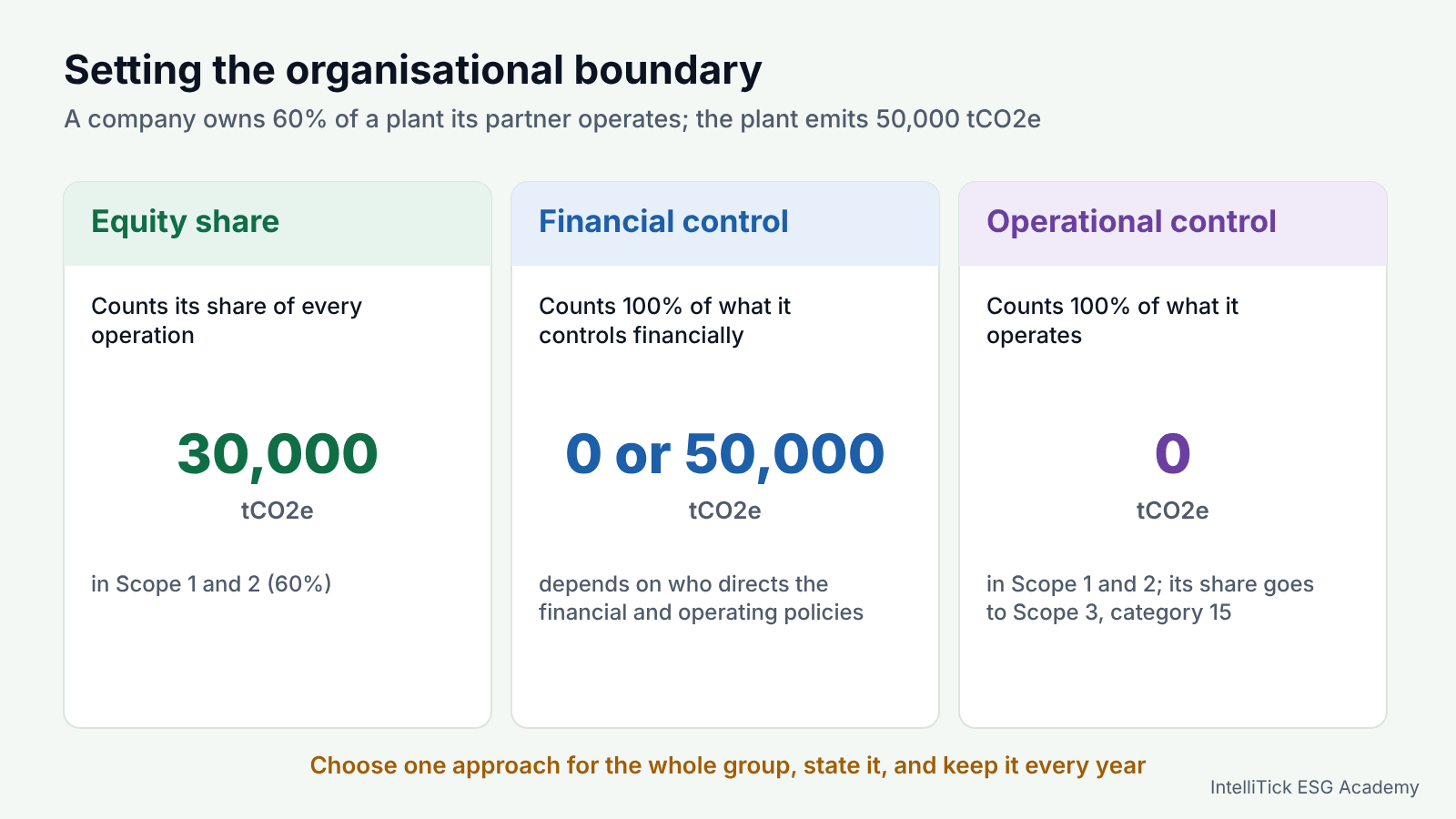
Before counting anything, a company decides which operations are in its inventory (the organisational boundary), which emissions from them it counts and how it classifies them (the operational boundary), and the year it…
Most Scope 1 emissions come from burning fuel in sources the company owns or controls — boilers, furnaces, kilns, generators and vehicles. The calculation is always the same: fuel used × energy content × emission factor.
Scope 1 also includes emissions released by chemical reactions rather than combustion (process emissions), and gases that escape (fugitive emissions). They are easy to miss, and in some industries they are the largest s…
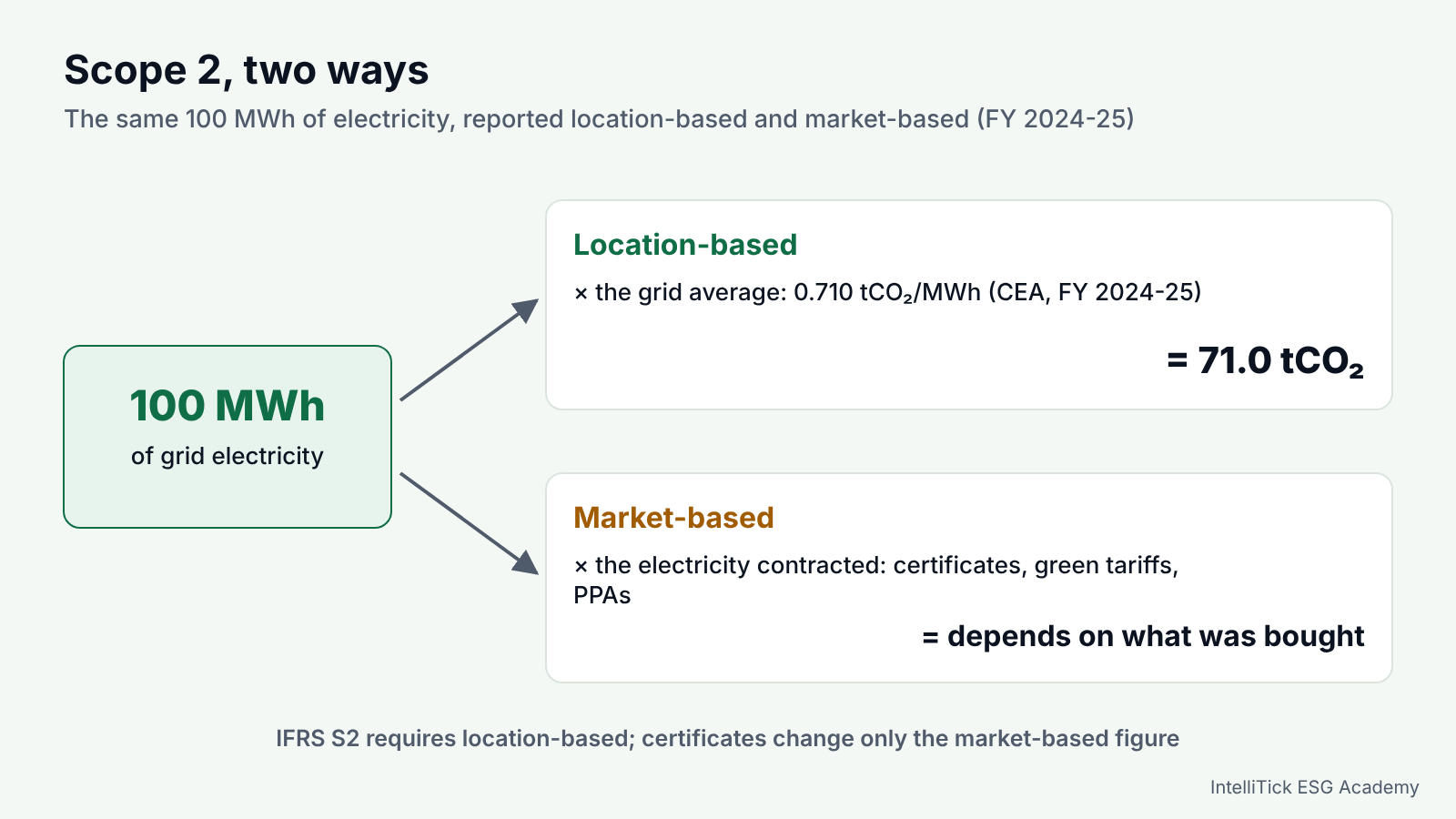
Scope 2 is the emissions from generating the electricity, steam, heat and cooling a company buys and uses. Since 2015, a company that can buy specific electricity reports it two ways — by location and by market2.
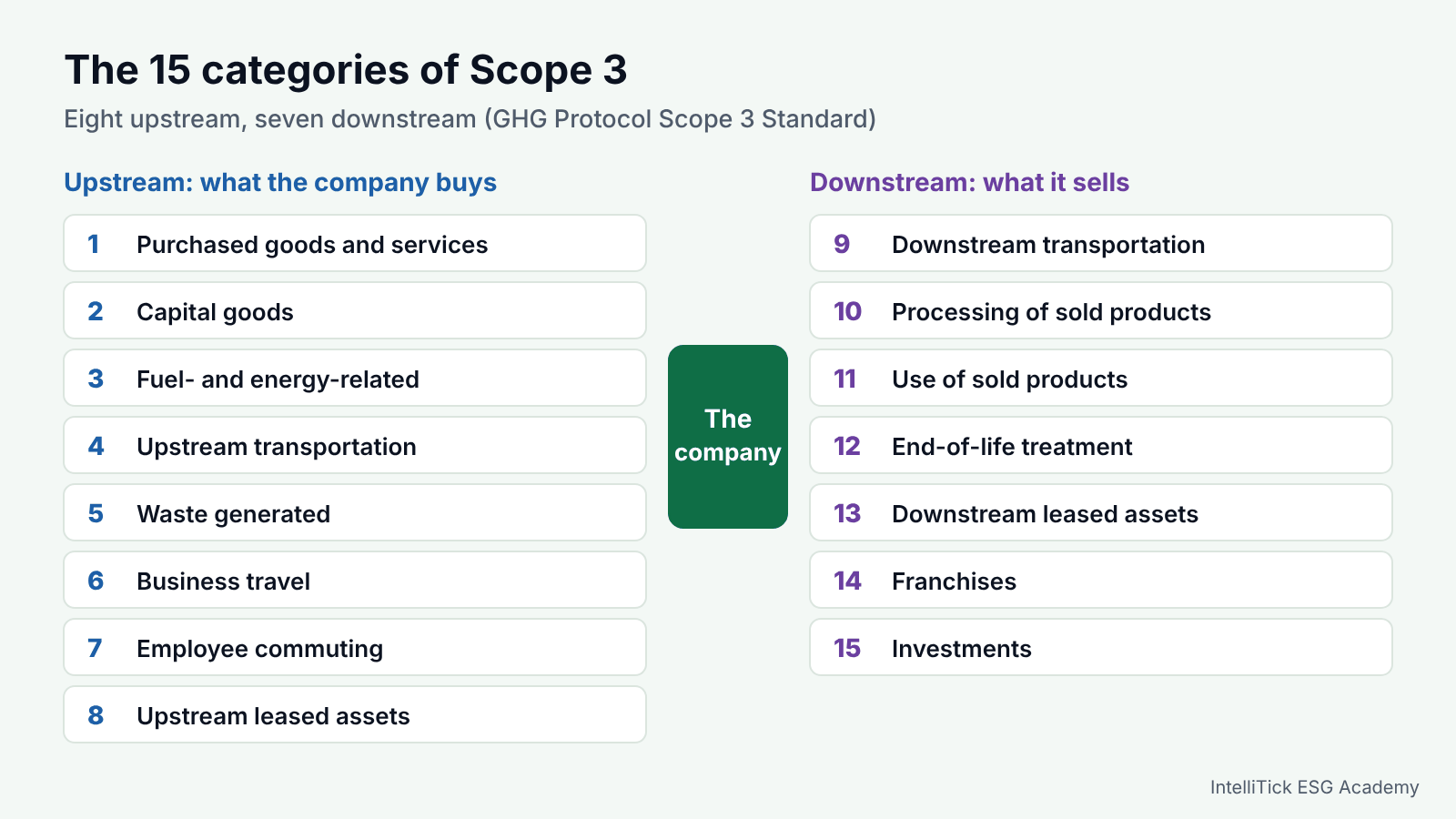
Scope 3 is all other indirect emissions — those that are a consequence of the company's activities but come from sources it does not own or control. For most companies it is the largest part of the footprint. The Scope …
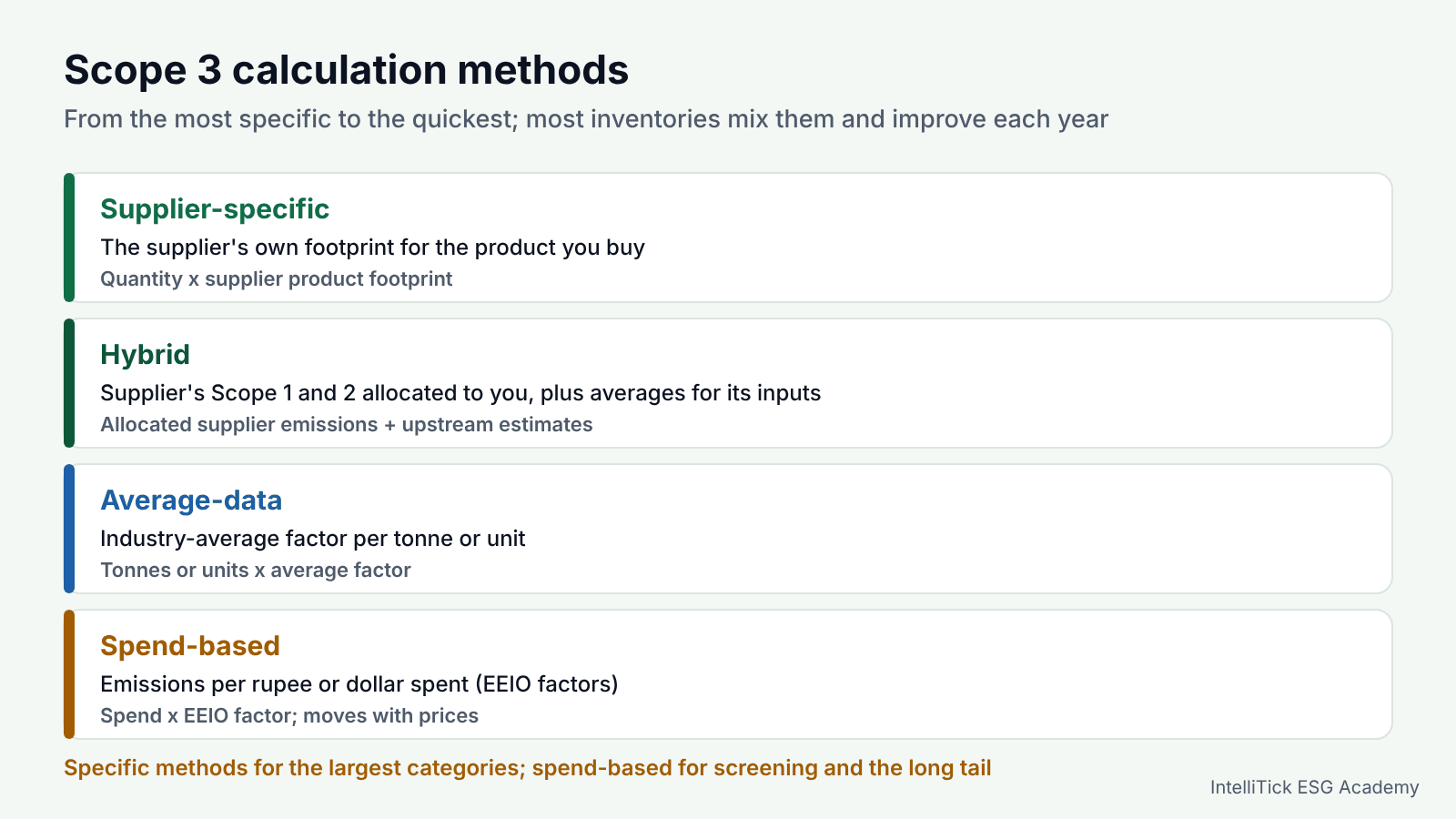
Scope 3 can be calculated at several levels of precision. The Technical Guidance describes, for each category, a range of methods — from supplier-specific data to estimates from spend. Most inventories mix them, and imp…
An inventory is only useful if someone else can repeat it and get the same answer. That takes a documented method, controlled data and an evidence trail — the same disciplines as financial reporting.
An inventory becomes a management tool when it carries a target. In India it is also becoming a compliance instrument — through the domestic carbon market — and a condition of trade with the EU.
For energy-intensive plants in India, energy and emissions are not only reported — they are filed with the Bureau of Energy Efficiency (BEE), verified by accredited agencies and settled in certificates. Missing a form i…
One inventory serves every framework, but each asks for it differently. Keep a single, controlled inventory and map it — never recalculate for each report.
Vindhya Fabrics Ltd is a fictional textile company preparing its first full inventory for FY 2025-26, for its BRSR and for a large European apparel customer. The figures are illustrative. Work through the tasks before o…
The reference you will come back to: the carbon accounting glossary, unit conversions and a factor sheet to keep, and checklists for running an inventory year.
Opens when every lesson is completed. 20 questions, 40 minutes, 70% to pass.
Sign in with your e-mail to record your progress and take the exam. Reading the lessons needs no sign-in.
What ESG is, who asks for it, how the frameworks and laws fit together, and how to start working in it — with Indian examples.

Prepare, check and file India's BRSR and BRSR Core: every section and calculation, assurance, the government filings behind the data, and the penalties to avoid.

Report under the CSRD and the revised ESRS after the Omnibus: who is in scope, double materiality, the standards, assurance and enforcement.

Apply IFRS S1 and S2 — governance, strategy, risk management, metrics and targets — and build an IFRS S2 report on top of the BRSR.

Report a company's impacts with the GRI Standards: GRI 1, 2 and 3, material topics, the topic standards and the content index.
ESGTrack prepares BRSR, CSRD and ISSB reports from approved data, with an audit trail an assurer can test.